

The Other Side of Illumination: Kanda Manseibashi

During the Holiday season, many festive lighting locations pop up in Tokyo. Some of them are very well known, for example; Omotesando street, Ebisu Garden Place Baccarat chandelier and Marunouchi street. The popular Blue Grotto at Nakameguro also returned to Shibuya this year. However, there is a lesser known lighting spot near Akihabara that’s a hidden gem. It can be found at the Manseibashi shopping center.
Akihabara is somewhat of a chaotic town – it’s known mostly for its anime and cosplay culture, and underground idols. The unforgettable shopping venue, mAAch ecute KANDA MANSEIBASHI, is just a 3-minute walk from Akihabara station, and it’s not to be missed. It is a redbrick building with 460-ft arches extending east and west with stunning orange lighting. To fully take in this view, it’s best to strategically position yourself on Mansei Bridge over the Kanda River. The striking architecture with its warm lighting looks like an inviting fireplace; it’s quite spectacular. It also offers the viewer a fantastic view of the bustling city of Akihabara.
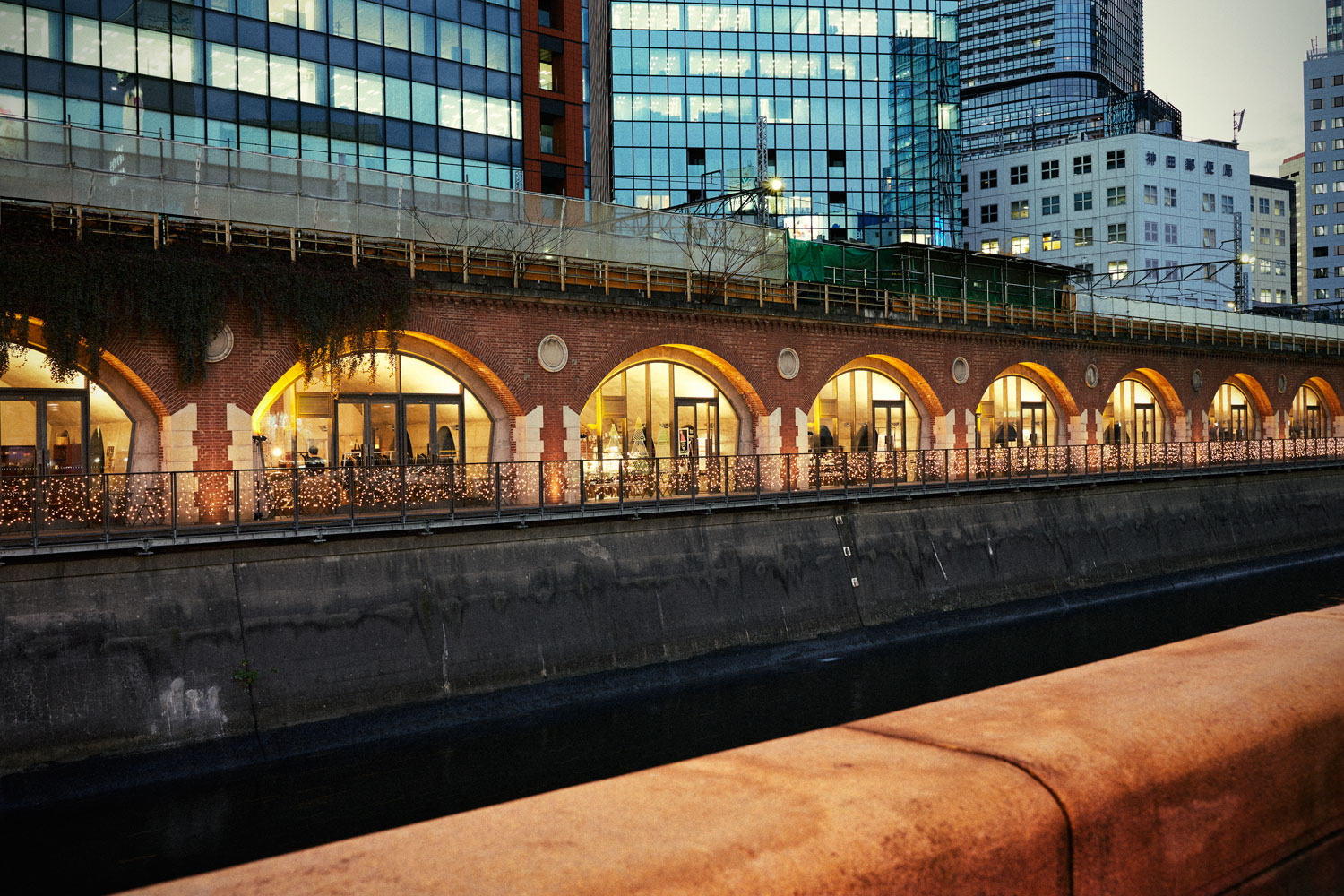
This magnificent arched building was originally constructed in 1912 to be an elevated train platform. There is still a railroad on top of the arch, and the JR Chuo Line runs on it. After its opening, the building functioned as a major terminal station, and the area around the station thrived. There used to be an abundance of restaurants, theaters and residential buildings. Some people used this station as a major hub to commute to the suburbs, and others traveled through it for sightseeing in Tokyo by foot, rickshaw and city trains. People also just came just enjoy the vibrant atmosphere, because the streets were always full of people.

The renowned architect, Tatsuno Kingo designed the Manseibashi station. He also designed Tokyo Station and the Bank of Japan Headquarters. One can definitely see that the old Manseibashi has similar characteristics to Tokyo Station’s brick building. Manseibashi Station flourished for a while, but in 1914, Tokyo station opened and Manseibashi became just another regular station. The vibrant energy vanished during that era. During World War II, the stations closed, because there were just not enough commuters. After closing, it was used as Transportation Museum, but that eventually moved to Saitama, so the building was left unused for a while.
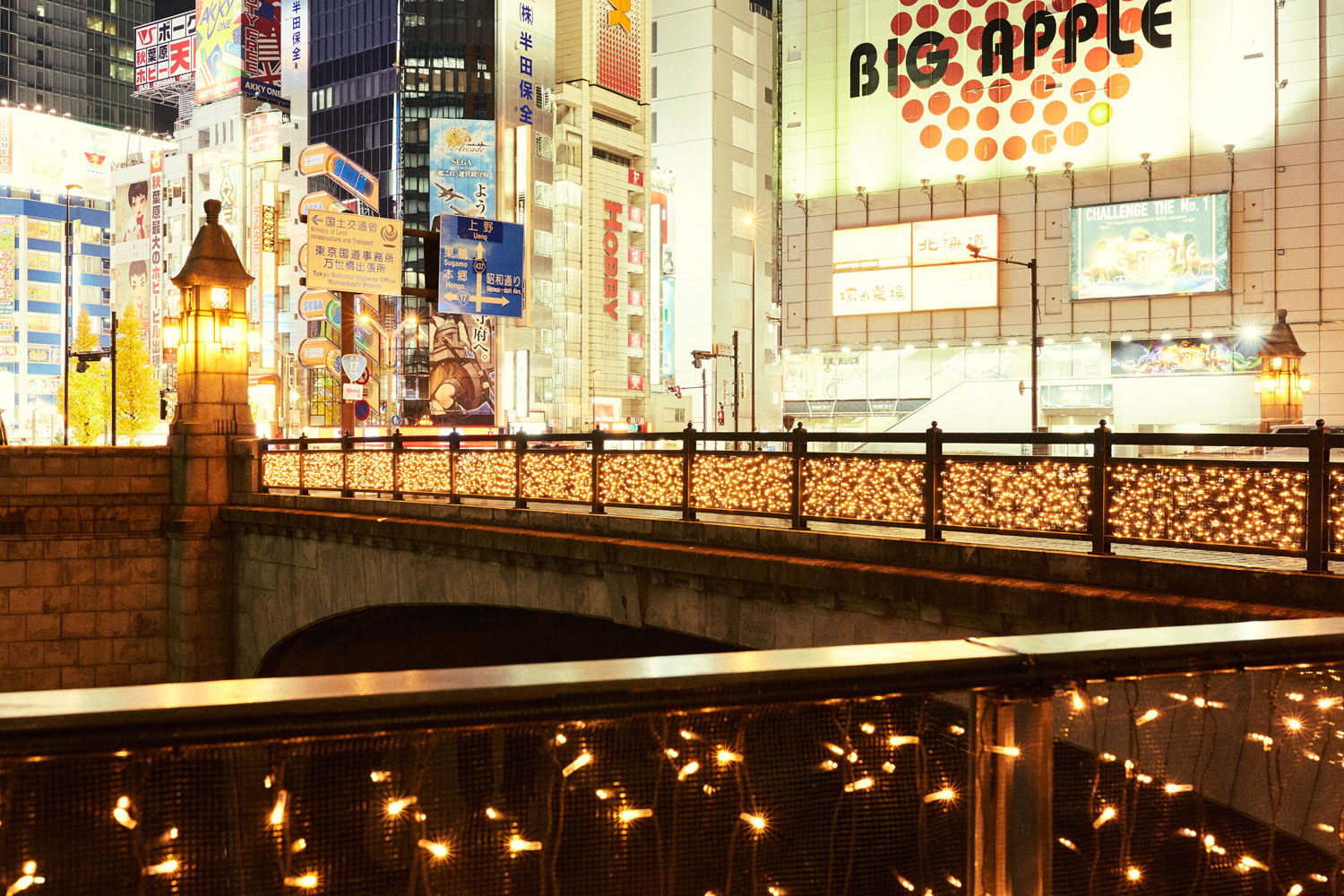
The new shopping building mAAch ecute KANDA MANSEIBASHI opened in 2013 in the old Manseibashi Station. Food, fashion and lifestyle stores moved into the arched bridge area, and areas that used to be platforms now boast cafes and terraces. The skilled architecture company, Mikan Gumi, was in charge of this major renovation. They kept the aesthetic of the old station and made more spaces for contemporary stores. The 100-yr-old brick building is now reborn with modern shops, but it still maintains its originally aura.

After you’ve enjoyed the spectacular views from Mansei Bridge, you can witness yet another splendid view across the bridge to the other side. There are two staircases called “1912 Stairs” and “1935 Stairs” leading to the old platform location. The former was built when the station opened, and the latter was built in the year that bears its name. When you walk into these hallowed staircases, you will see a beautiful white tile wall and instantly feel the historic atmosphere.
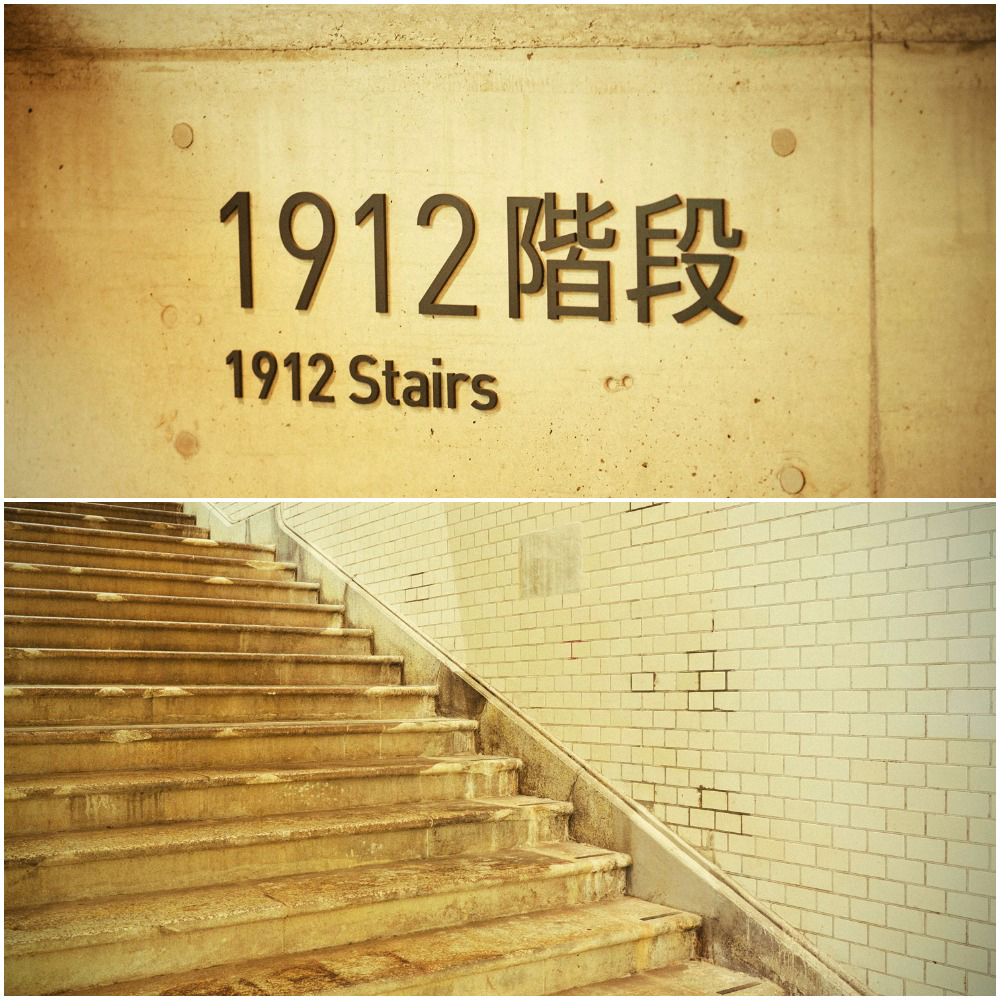
Footsteps and voices reflect in interesting ways down these halls, almost as if you’re hearing distant sounds from a past century. You will also be able to see the JR Chuo Line running through the windows of the staircase. These historic cases are free and open to the public, so anyone can come in. On the rooftop, you’ll see a medallion emblem that existed a 100 years ago. Some of the newer stores in this building include: Obscura Coffee Roasters and the sophisticated interior store, Haluta.
Lastly, in the Kanda-Suda Area beside mAAch ecute, there are highly sought after restaurants to be found within these historical buildings. There is a popular Japanese confectionery shop called Takemura, an anglerfish restaurant, Isegen, a soba spot, Kanda Matsuya, and a chicken hot pot place called Botan.
With all these visual, historical and culinary delights, mAAch ecute KANDA MANSEIBASHI definitely needs to be on your list the next time you’re in Tokyo.
For more info about this illumination haven, click here.
All Photos by Keta Tamamura (Erz)
Original text by Akihiro Tajima
If you liked this story, check out more in our Urban Transplants issue.


